

Colombia:
From Coca to Cacao.
In 2003, at the beginning of my career in security and risk management, I remember the office falling silent as my colleagues and I gathered around the television to watch the aftermath of the 200kg bomb that had torn through Bogota’s El Nogal Club. The exclusive private club, located in one of Bogota’s most affluent neighbourhoods just minutes from the British Embassy, had been devastated. The attack, later attributed by the Colombian authorities and courts to FARC, killed 36 people and injured more than 200. It remains one of the deadliest terrorist attacks in the city’s history.
Exactly one year later, I was boarding a plane to Colombia for the first time. It would also be my first time setting foot in Latin America.
The Story Didn’t Start With Chocolate
My first experience of Colombia was through the window of an armoured vehicle, travelling with a close protection team. The only place I could wander freely was inside the British Embassy, so my interaction with the people of Colombia was limited.
Today, Colombia has transformed in a way that I never thought I would witness in my lifetime. Back then, the country was facing a very different security reality. Decades of conflict, violence linked to the drug trade and the presence of armed groups shaped everyday life, and many areas that are now welcoming travellers were considered too dangerous to visit.
What surprised me most, when I eventually started travelling independently during safer times, was the warmth of the people. Despite everything the country had endured, I found Colombians to be welcoming, generous and remarkably optimistic.
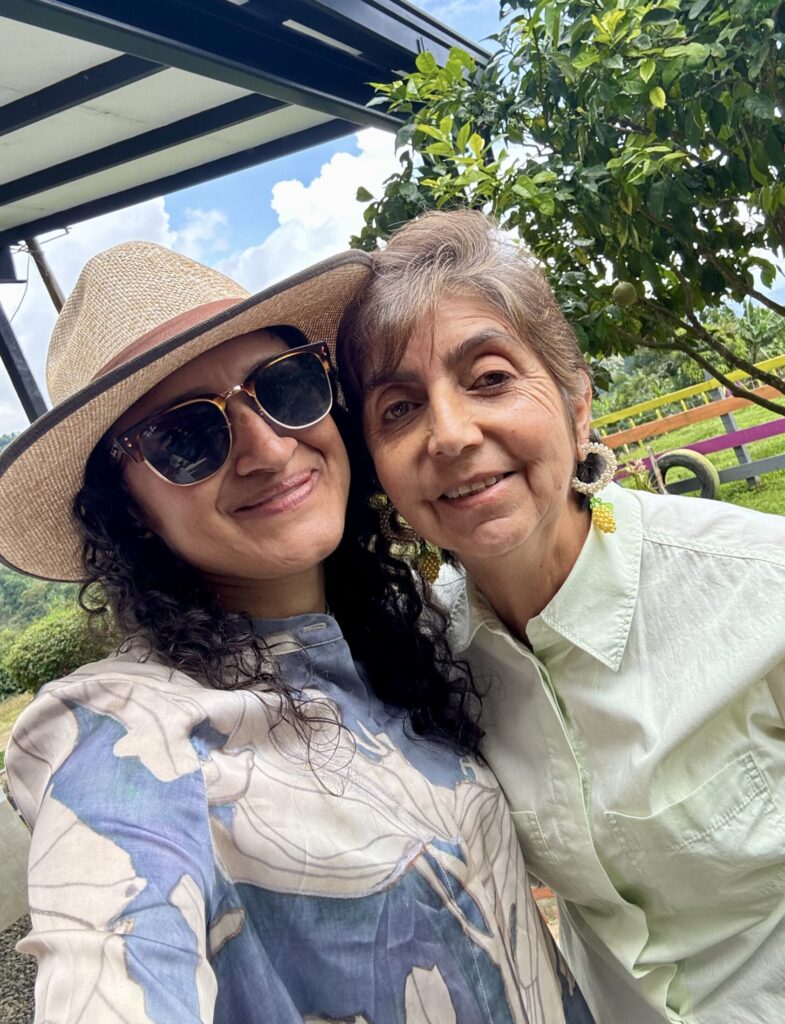
Late last year, I was in Jardin on what was supposed to be a work trip. By the end of it, I’d viewed a property because I didn’t want to leave. At the coffee finca that I visited, the lady of the house told me it was her birthday. Smiling, she said I was her birthday present before insisting I join her family and close friends for dinner that evening. At that point, she probably could have adopted me. Living on a coffee farm suddenly seemed like a very appealing life choice.
That warmth is why Colombia’s transformation matters to me, and it’s part of why the transition from coca to cacao stood out amongst everything else I learnt about the country. Saying them out loud, the two words practically rhyme. That’s why I decided on the title, I thought it was catchy. But the rhyme undersells the story.
Coca’s Replacement
The 2016 peace agreement between the Colombian government and the Revolutionary Armed Forces of Colombia (FARC) ended more than 50 years of conflict, but peace alone does not put food on the table.
Thousands of former guerrilla fighters suddenly found themselves needing legal livelihoods. Many had spent years in remote jungle regions, with coca cultivation providing one of the few economic options available. When the conflict ended, the challenge became how to reintegrate former combatants into society, whilst also creating opportunities for rural communities that had spent decades caught in the crossfire.
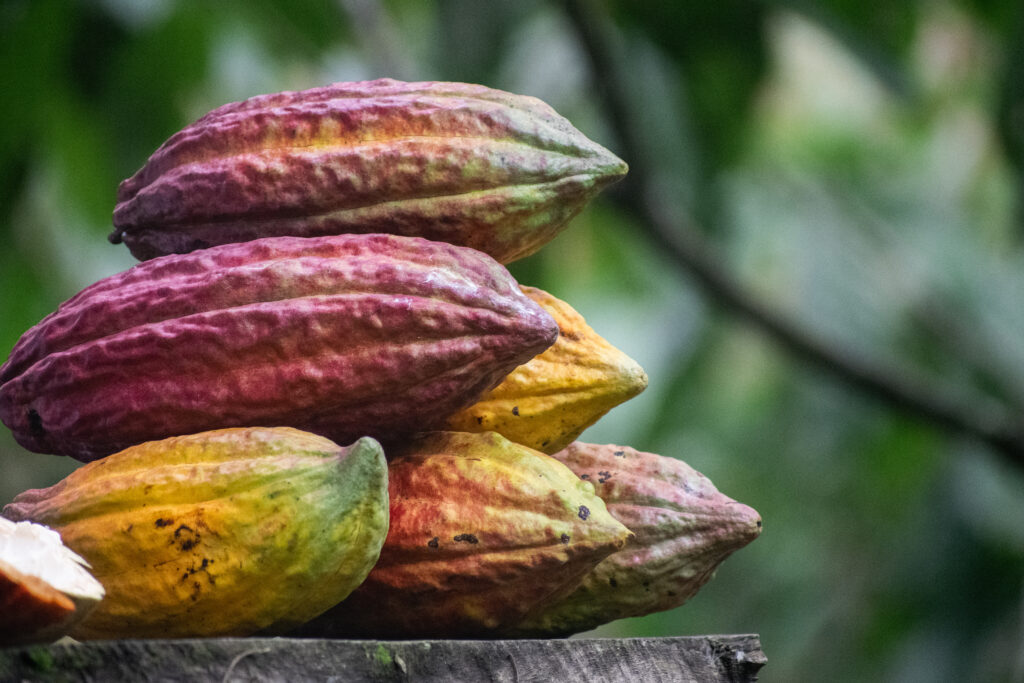
One of the most promising answers has been cacao. Unlike coca, which ties communities to violent criminal networks, cacao offers a legitimate and sustainable livelihood. Government programmes, NGOs and private organisations have supported the transition by providing training, resources and access to markets for those willing to make the change. Coca and cacao come from the same soil, yet they offer completely different paths. One became linked to violence, conflict and the illegal drug trade. The other is helping communities, and, fortunately for chocolate lovers everywhere, has the added advantage of ending up in a much more enjoyable place than its predecessor. I appreciate that last point is somewhat subjective.
Rebuilding Lives
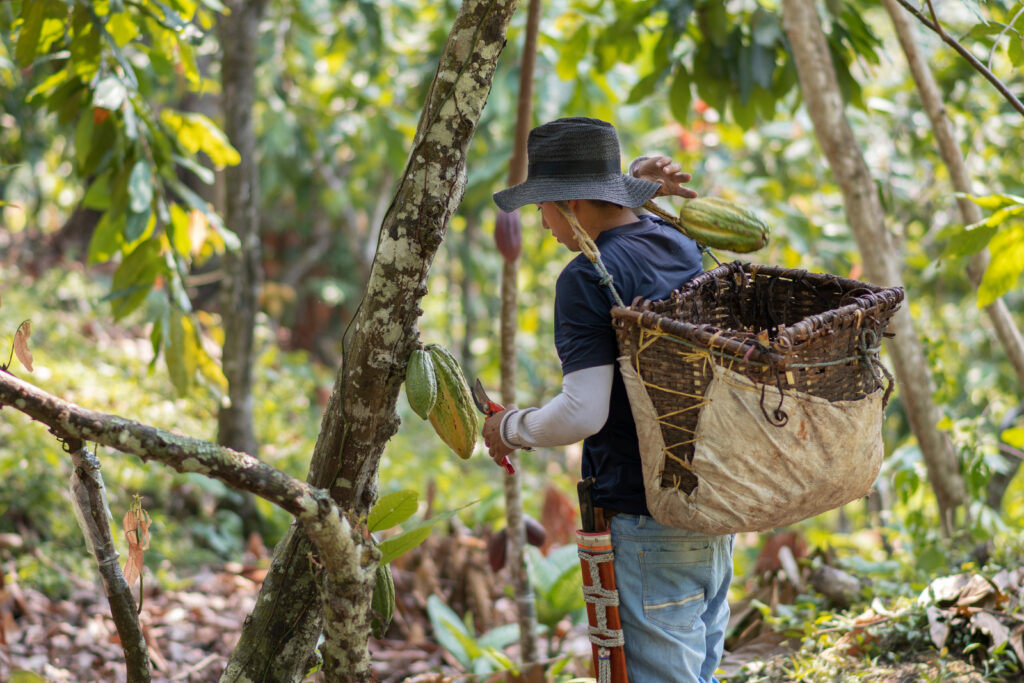
Nobody mentions that swapping coca for cacao isn’t a straightforward swap. Former combatants and rural farmers had to learn cultivation, soil management, fermentation, drying, how to get a bean to a buyer instead of a border. That’s not a new crop. That’s an entirely new life, and most of them were starting it with no safety net and with trauma sitting somewhere in the room.
Patience was the hard part. Coca pays fast. That’s the whole reason it took hold in the first place. Cacao trees take years before they’re worth anything. After a lifetime where waiting usually got you killed, that’s not a career change. That’s a genuine leap of faith, and a slow one.
Manigua de Paz, Jungle of Peace, is where a lot of that faith ended up. Close to 100 former FARC fighters now work across two co-operatives in Meta and Tumaco. Both regions are the kind of places that would have been ‘no-go zones’ in my security briefings, and it still isn’t a tidy before-and-after story. It’s people quietly rebuilding something in places the world stopped paying attention to the moment the fighting stopped making the news.
One of the co-operative’s members, known as Segundo, put it better than any report I’ve read – their hands weren’t made only for holding weapons, but for something like cacao, which he calls love, life and peace. I’ve read a lot about “post-conflict livelihood transitions” but none of it has stayed with me in the way that sentence has.
Manigua de Paz. Jungle of Peace. Not a branding exercise. The whole point, in three words.
Meeting the Farmers
For many of us, chocolate is simply something we unwrap without giving it much thought. Visiting a cacao farm, talking to the people who grow it and understanding what that crop represents changes the way you see it. It stops being just another product on a supermarket shelf and becomes connected to the people, places and history behind it.
Tourism has also become part of that journey. Visiting cacao farms creates another source of income for local communities while giving visitors the opportunity to understand a side of Colombia that many never get to see. Whether it’s walking through plantations, learning how chocolate is produced, or hearing directly from the people rebuilding their lives, these experiences offer a perspective that is deeper.
Want more stories like this one? We send occasional dispatches from the road, the people we meet and the places most guidebooks skip. Sign up to The Offbeater and we’ll send the next one your way.
My Take
When I founded Offbeat Horizons, I wasn’t looking to create another tour company. I wanted to introduce people to the Latin America I’d come to know over the years.
Today, I live in neighbouring Panama, and Colombia has become somewhere I can escape to for a long weekend. I can spend the morning cafe hopping, wander colourful streets without a second thought. Even now, I still occasionally have a pinch-me moment when I compare it with the country I first encountered in 2004.
One conversation, in particular, has stayed with me. During one of my visits, a local told me he refused even to say Escobar’s name. To him, the world’s fascination with one man had come to overshadow the millions of Colombians who lived through the violence and spent decades rebuilding their country.
When people think of Colombia, the conversation still too often begins with cocaine, Pablo Escobar or Narcos. Yet the Colombia I have come to know is one of resilience, hospitality and optimism. It is a country that has worked incredibly hard to redefine itself, and initiatives like Coca to Cacao are one small but powerful example of that. And no. We do not include the Pablo Escobar tour in our trips.
If you’d rather see this side of Colombia for yourself, the cacao farms or the coffee fincas that made me want to keep returning, take a look at how we travel through Colombia.
5 ways to travel better
Practical ideas for creating richer, and more authentic journeys.
Explore article →
The places that stay with you
A collection of destinations chosen for their character and soul.
Explore article →
Why offbeat travel matters
Travel slower, look closer and leave room for the unexpected.
Explore article →